I cannot believe it has been 6 years since I last posted. I’m hoping to get this blog going again, starting with a review of the new Opticron Verano VHD 8x42.
Wednesday, 4 August 2021

Sunday, 5 April 2015
Minox BV BR 8x42 Reveiw
Following on from my review of the Minox BL HD 8x44 Minox sent me the BV BR 8x42 model to try out. This binocular has a SRP of £209 but retails at around £165. Made in China, it sits just above the bottom of the range BF.
Although made in China, the binocular chassis is designed by Volkswagen and is engineered to "german quality". The body is aluminium and is covered in black rubber armouring which gives it a very slick and stylish look. It is fully multi-coated, phase corrected and is waterproof and fogproof. Eye Relief on the 8x42 is an excellent 18mm. I often struggle with eye relief as I wear glasses and like the binoculars to sit right on the glass. 18mm is usually perfect for me, but I found it a little bit too much on this binocular and had to hold them slightly away from my glasses to avoid blackouts. Field of view is an impressive 129m.
I have to say that the binoculars look great and feel great in the hand. At 780g they aren't particularly light, but this gives a reassuring feel of quality. They feel extraordinarily well made. I know Minox take great pride in the build quality of their binoculars and subject them to stringent quality control inspections. Clearly, this contributes to the high build quality and offers the customer reassurance.
The focussing on the model I tried was very smooth, except for a small section near the close focus which felt like the focus wheel was scraping off the side of the binocular. I must say, I am ultra critical of focusing and this anomaly wouldn't have stopped me from buying the binoculars. The focusing wheel is large enough to use two fingers and take about one and half turns anticlockwise from close focus to infinity.
Close focus is listed as 1.2m. I do a lot of insect and butterfly watching and these binoculars should be ideal for this. However, tricky eye positioning made it difficult to achieve a sharp, comfortable image at close focus.
So, they look good, they feel good but what's the view like? Sharpness is quite impressive for the price, but compared to a similar priced binocular, it did lack something in sharpness. Although these binoculars do not have ED glass, chromatic aberration is well controlled and quite acceptable, even in strong sunlight.
The binoculars are bright and contrast is good for the price point. The colour rendition seemed quite warm to me and reds, oranges, browns and blacks really stand out. However, whites look a little creamy to my eyes and greens look a little washed out. What I will say is stray light can be slightly problematic under certain conditions. I stood under the canopy of Scots' Pine trees looking at a roosting Tawny Owl and the stray light was quite distracting.
I did notice a strange anomaly with these binoculars. Compared to several other 8x binoculars with a similar field of view, objects in the image looked smaller through the Minox. This has left me wondering if they truly have 8x magnification.
As I mentioned earlier, I am very critical when it comes to binoculars. Things that I notice might not be noticeable to others. These binoculars have recently been on sale for as low as £149. For this price, they are very good value for money. The highlight for me has to be the impressive build quality. Along side the perfectly acceptable optics, these could be a good choice for those on a budget. Many thanks to Rob Spicer at Minox for providing the model for review.
Although made in China, the binocular chassis is designed by Volkswagen and is engineered to "german quality". The body is aluminium and is covered in black rubber armouring which gives it a very slick and stylish look. It is fully multi-coated, phase corrected and is waterproof and fogproof. Eye Relief on the 8x42 is an excellent 18mm. I often struggle with eye relief as I wear glasses and like the binoculars to sit right on the glass. 18mm is usually perfect for me, but I found it a little bit too much on this binocular and had to hold them slightly away from my glasses to avoid blackouts. Field of view is an impressive 129m.
I have to say that the binoculars look great and feel great in the hand. At 780g they aren't particularly light, but this gives a reassuring feel of quality. They feel extraordinarily well made. I know Minox take great pride in the build quality of their binoculars and subject them to stringent quality control inspections. Clearly, this contributes to the high build quality and offers the customer reassurance.
The focussing on the model I tried was very smooth, except for a small section near the close focus which felt like the focus wheel was scraping off the side of the binocular. I must say, I am ultra critical of focusing and this anomaly wouldn't have stopped me from buying the binoculars. The focusing wheel is large enough to use two fingers and take about one and half turns anticlockwise from close focus to infinity.
Close focus is listed as 1.2m. I do a lot of insect and butterfly watching and these binoculars should be ideal for this. However, tricky eye positioning made it difficult to achieve a sharp, comfortable image at close focus.
So, they look good, they feel good but what's the view like? Sharpness is quite impressive for the price, but compared to a similar priced binocular, it did lack something in sharpness. Although these binoculars do not have ED glass, chromatic aberration is well controlled and quite acceptable, even in strong sunlight.
The binoculars are bright and contrast is good for the price point. The colour rendition seemed quite warm to me and reds, oranges, browns and blacks really stand out. However, whites look a little creamy to my eyes and greens look a little washed out. What I will say is stray light can be slightly problematic under certain conditions. I stood under the canopy of Scots' Pine trees looking at a roosting Tawny Owl and the stray light was quite distracting.
I did notice a strange anomaly with these binoculars. Compared to several other 8x binoculars with a similar field of view, objects in the image looked smaller through the Minox. This has left me wondering if they truly have 8x magnification.
As I mentioned earlier, I am very critical when it comes to binoculars. Things that I notice might not be noticeable to others. These binoculars have recently been on sale for as low as £149. For this price, they are very good value for money. The highlight for me has to be the impressive build quality. Along side the perfectly acceptable optics, these could be a good choice for those on a budget. Many thanks to Rob Spicer at Minox for providing the model for review.
Sunday, 22 March 2015
Vanguard Endeavour ED II 8x42 Review
Following on from my review of the Vanguard Endeavour ED II 10x42 back in November, Vanguard sent me the 8x42 model to try out. As mentioned previously, the use of "premium Japanese ED glass", widely believed to be sourced from Hoya, is a star feature of this binocular. This glass is a significant upgrade from the Chinese ED glass used in the previous model.
These look like a stylish, high quality binocular, but how do they feel in the hand? Here's what I wrote back in November for the 10x42 model:
"The ergonomics on this model just didn't quite work for me. I found the space between the two barrels to be quite tight and the binocular just didn't feel quite right in my large hands. As a result, I found it quite difficult to hold the binocular steady."
The lower magnification of the 8x42 certainly helps and I had no problem whatsoever holding the binocular steady. I like to use two fingers to focus a binocular, but the positioning of the focus wheel on the Vanguard makes this impossible. Therefore, I felt I had to place my hands higher up than I would like, which in turn made them slightly front heavy. However, with prolonged use, I did find a comfortable hand position and, along with the lower magnification, made the experience much more enjoyable than that of the 10x42.
The focussing wheel travels incredibly smoothly and quickly. It focusses from right to left, from close focus to infinity in about three quarters of a turn. I like a quick focuser and although I found this to be a little too quick, in the 10x42, I really enjoyed being able to move from close focus to infinity quickly. Unlike the 10x42, I found it very easy to obtain a sharp image.
Close focus is listed as 2m, but in reality I found I could focus down to 1.5m. I do a lot of insect and butterfly watching and these binoculars are ideal for this.
So, they look good, they feel good but what's the view like? Quite simply, they are incredibly sharp. It has one of the flattest views on the market today. The image really is sharp right to the very edge. Chromatic aberration is very well controlled and is virtually eliminated by the high quality glass.
The colour rendition seemed quite warm to me and reds, oranges, browns and blacks really stand out. However, whites look a little creamy to my eyes. Brightness is very good in strong sunlight, but I was a little disappointed in gloomy conditions. It's low light credentials are a little disappointing too. Perhaps the inclusion of dielectric coatings on the prisms would rectify this.
The Vanguard Endeavour ED II retails for £399. Given the high quality glass, excellent sharpness right to the very edge, lack of chromatic aberration, excellent close focus and quality feel, this seems to be a very good price. However, dielectric coatings on the prisms are a glaring omission, with other brands producing cheaper binoculars with better coatings. Despite these minor shortcomings, the Endeavour ED II is a quality binocular that is a significant improvement from its predecessor.
Like its predecessor, the ED II is an open bridge binocular, made with a lightweight magnesium alloy body. It weighs in at 770g. The binocular is covered in black rubber armouring which gives it a very slick and stylish look. As you would expect with a binocular in this price range, it is waterproof and fogproof. Eye Relief on the 8x42 is an excellent 19.5mm. I often struggle with eye relief as I wear glasses and like the binoculars to sit right on the glass. The Vanguard 8x42 provides a little too much eye relief for this, but I've found it is far more comfortable to have too much than too little.
These look like a stylish, high quality binocular, but how do they feel in the hand? Here's what I wrote back in November for the 10x42 model:
"The ergonomics on this model just didn't quite work for me. I found the space between the two barrels to be quite tight and the binocular just didn't feel quite right in my large hands. As a result, I found it quite difficult to hold the binocular steady."
The lower magnification of the 8x42 certainly helps and I had no problem whatsoever holding the binocular steady. I like to use two fingers to focus a binocular, but the positioning of the focus wheel on the Vanguard makes this impossible. Therefore, I felt I had to place my hands higher up than I would like, which in turn made them slightly front heavy. However, with prolonged use, I did find a comfortable hand position and, along with the lower magnification, made the experience much more enjoyable than that of the 10x42.
The focussing wheel travels incredibly smoothly and quickly. It focusses from right to left, from close focus to infinity in about three quarters of a turn. I like a quick focuser and although I found this to be a little too quick, in the 10x42, I really enjoyed being able to move from close focus to infinity quickly. Unlike the 10x42, I found it very easy to obtain a sharp image.
Close focus is listed as 2m, but in reality I found I could focus down to 1.5m. I do a lot of insect and butterfly watching and these binoculars are ideal for this.
So, they look good, they feel good but what's the view like? Quite simply, they are incredibly sharp. It has one of the flattest views on the market today. The image really is sharp right to the very edge. Chromatic aberration is very well controlled and is virtually eliminated by the high quality glass.
The colour rendition seemed quite warm to me and reds, oranges, browns and blacks really stand out. However, whites look a little creamy to my eyes. Brightness is very good in strong sunlight, but I was a little disappointed in gloomy conditions. It's low light credentials are a little disappointing too. Perhaps the inclusion of dielectric coatings on the prisms would rectify this.
The Vanguard Endeavour ED II retails for £399. Given the high quality glass, excellent sharpness right to the very edge, lack of chromatic aberration, excellent close focus and quality feel, this seems to be a very good price. However, dielectric coatings on the prisms are a glaring omission, with other brands producing cheaper binoculars with better coatings. Despite these minor shortcomings, the Endeavour ED II is a quality binocular that is a significant improvement from its predecessor.
Tuesday, 17 March 2015
Latest
I've had a very busy few weeks and have only managed to get out birding a few times. Two weeks ago I visited RSPB Lochwinnoch and RSPB Baron's Haugh. A good amount of birds were seen at both reserves. The highlights are listed below.
Lochwinnoch
Buzzard
Reed Bunting
Greenfinch
Goldfinch
Starling
Mute Swan
Whooper Swan
Blue Tit
Coal Tit
Great Tit
Chaffinch
Collared Dove
Tufted Duck
Mallard
Baron's Haugh
Cormorant
Mute Swan
Lapwing
Wren
Blue Tit
Great Tit
Robin
Bullfinch
Buzzard
Kestrel
Blackbird
Grey Heron
Tufted Duck
Mallard
However, the highlight over the last few weeks has been the birding I have done at my "local patch". Linwood, Renfrewshire, is surrounded with a variety of habitats, with good numbers of breeding territories, Birds that nest in the local area are Buzzard, Barn Owl, Oystercatcher and Bullfinch. There's woodland, wetland, farmland and moorland habitats. The Linwood Community Woodland is a particular highlight. This weekend whilst out walking I saw Blue Tit, Great Tit, Long Tailed Tit, Robin, Blackbird, Magpie, Mallard, Oystercatcher, Yellowhammer, Chaffinch, Song Thrush, Bullfinch, Jackdaw and Carrion Crow - not to mention a stag roe deer! All on my doorstep.
Lochwinnoch
Buzzard
Reed Bunting
Greenfinch
Goldfinch
Starling
Mute Swan
Whooper Swan
Blue Tit
Coal Tit
Great Tit
Chaffinch
Collared Dove
Tufted Duck
Mallard
Baron's Haugh
Cormorant
Mute Swan
Lapwing
Wren
Blue Tit
Great Tit
Robin
Bullfinch
Buzzard
Kestrel
Blackbird
Grey Heron
Tufted Duck
Mallard
However, the highlight over the last few weeks has been the birding I have done at my "local patch". Linwood, Renfrewshire, is surrounded with a variety of habitats, with good numbers of breeding territories, Birds that nest in the local area are Buzzard, Barn Owl, Oystercatcher and Bullfinch. There's woodland, wetland, farmland and moorland habitats. The Linwood Community Woodland is a particular highlight. This weekend whilst out walking I saw Blue Tit, Great Tit, Long Tailed Tit, Robin, Blackbird, Magpie, Mallard, Oystercatcher, Yellowhammer, Chaffinch, Song Thrush, Bullfinch, Jackdaw and Carrion Crow - not to mention a stag roe deer! All on my doorstep.
Wednesday, 4 February 2015
Hogganfield Loch and Butterfly Conservation AGM
On Saturday 31st January I visited Hogganfield Loch for the first time this year. Owing to the recent low temperatures, large parts of the loch were frozen, along with smaller ponds.


Despite the cold and extremely icy footpaths, good numbers of walkers and birdwatchers were enjoying the large numbers of wildfowl present. This included large numbers of whooper swans. Other highlights included male and female goosander, herring gulls, blackheaded gulls, lesser black back gulls, tufted ducks, mallards, coots, moorhens, wigeon, gadwall, pied wagtail, magpies, robin, dunnock and large numbers of feral pigeons. A few photos are provided below.


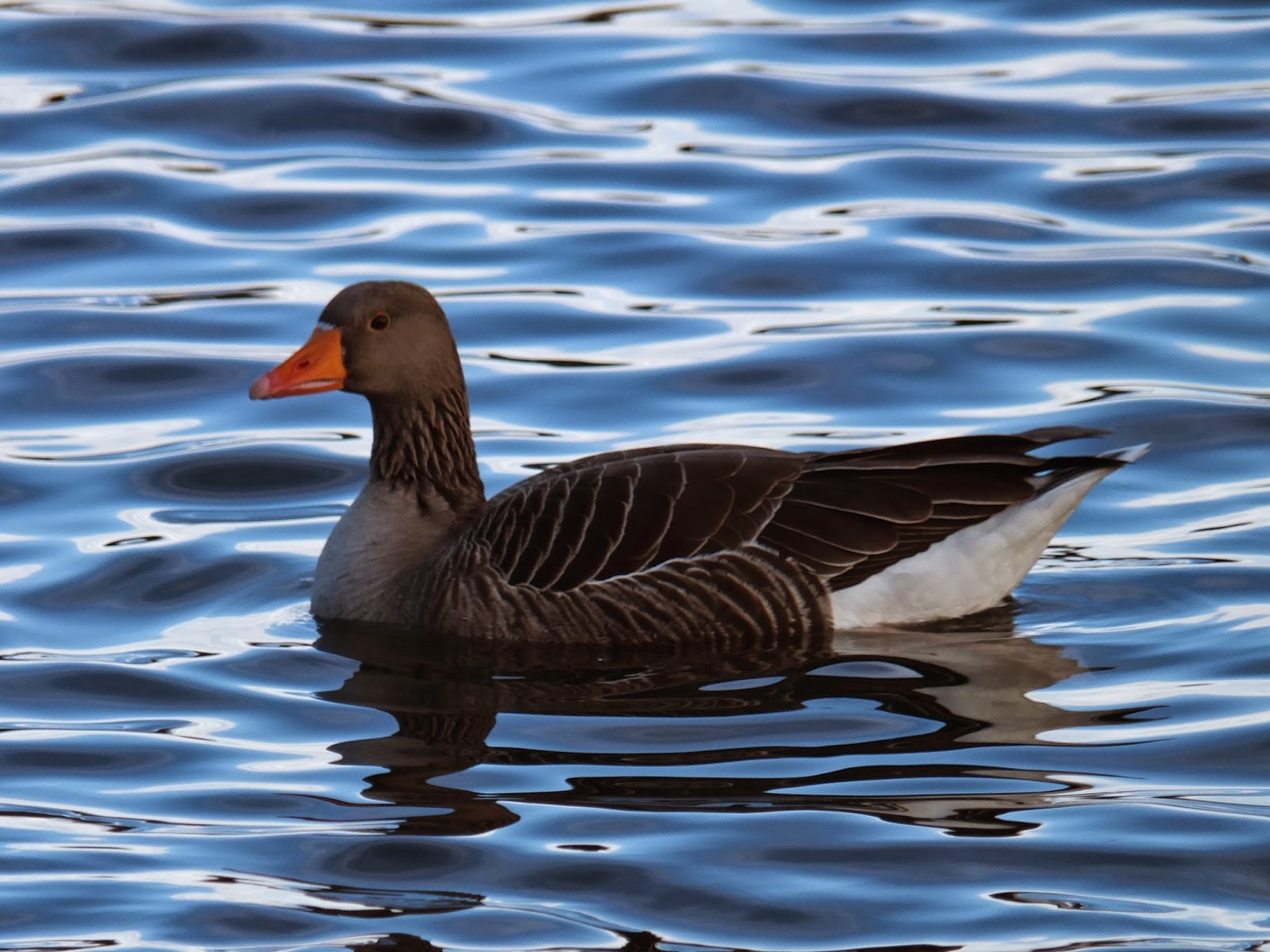


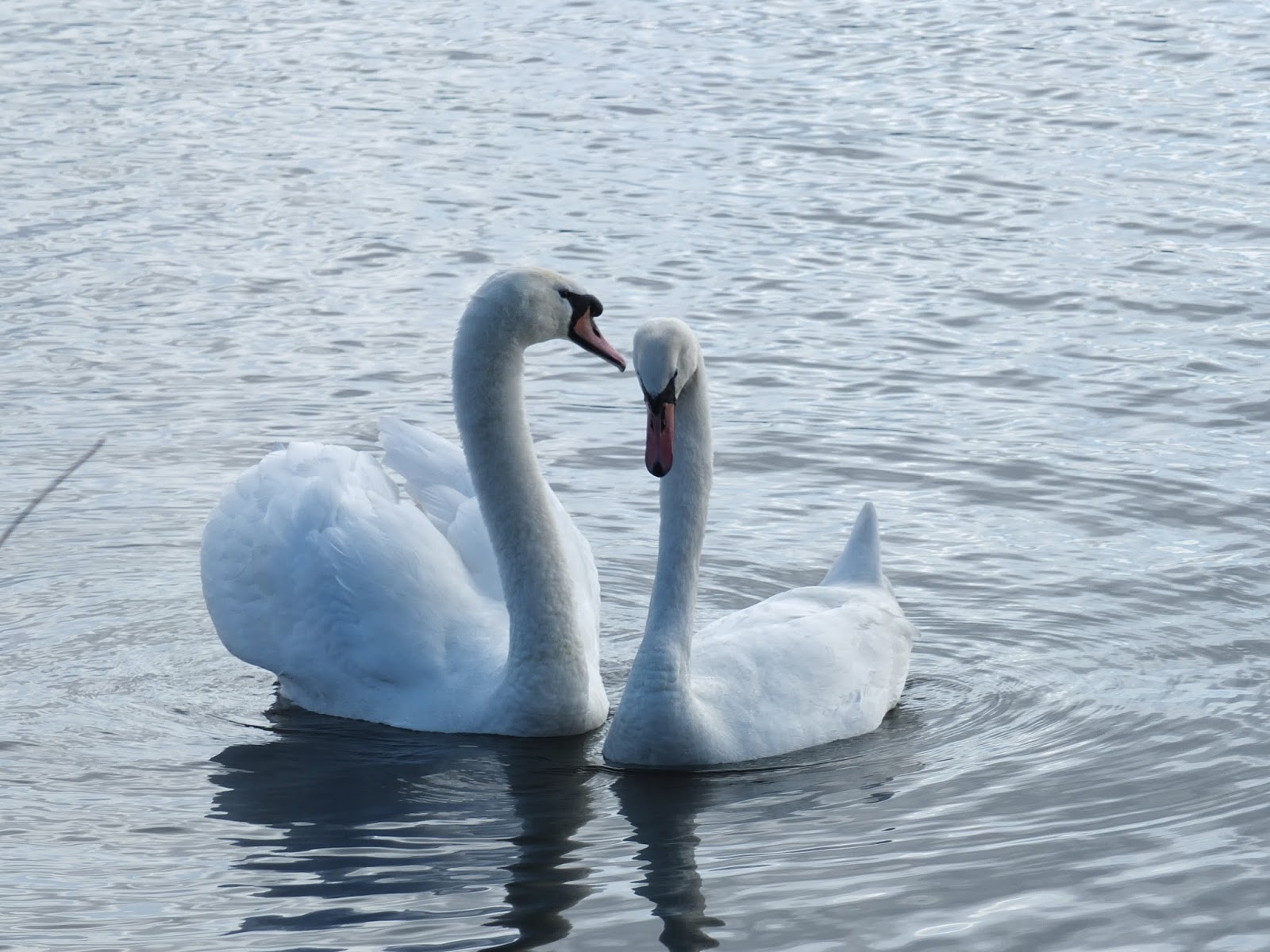


Despite the cold and extremely icy footpaths, good numbers of walkers and birdwatchers were enjoying the large numbers of wildfowl present. This included large numbers of whooper swans. Other highlights included male and female goosander, herring gulls, blackheaded gulls, lesser black back gulls, tufted ducks, mallards, coots, moorhens, wigeon, gadwall, pied wagtail, magpies, robin, dunnock and large numbers of feral pigeons. A few photos are provided below.


After enduring the cold for around 90 minutes, a friend and I drove from Hogganfield to Chatelherault Country Park in Hamilton, Lanarkshire for the AGM of the Glasgow and South West Scotland branch of the Butterfly Conservation Society. We were treated to a review of the year, including attempts to reintroduce the Small Blue butterfly to Ayrshire and a stimulating talk by Davie Black from Plantlife. Everyone left the AGM with a renewed optimism for butterfly watching. Roll on spring!
Sunday, 25 January 2015
Welcome Back !
After our winter shutdown, Tartan Birder is back. The weather in the west of Scotland hasn't been conducive to birding over the last few weeks, but I have had a few recent highlights including, a flock of 24 redwings in Kelvingrove Park, Glasgow, and several Buzzards spotted in Renfrewshire.
Hopefully 2015 will be a great birding year for me and you can read regular updates, including photographs, here on the blog. I've included below a brief list of what to expect over the coming months.
A trip to Chatelherault Park, Lanarkshire, including the AGM of the Butterfly Conservation Society.
The Tartan Birder heads south...again. A visit to RSPB Leighton Moss.
Loch of Lowes - Osprey Watch!
Scottish Bird Fair 2015.
Sea Watching in Cumbria - the Tartan Birder visits RSPB St. Bees.
Of course, I will include updates on my visits to local nature reserves, including RSPB Lochwinnoch, RSPB Baron's Haugh, Possil Marsh, Millichen Farm, Loch Ardinning, Hogganfield Loch and Glen Moss.
I hope to continue reviewing binoculars, scopes and monoculars. The following reviews will be published over the coming weeks:
Hawke Frontier ED 8x43
Viking MD 6.5x32
Viking AW 65mm Spotting Scope
Keep checking in to the most comprehensive birding and wildlife blog in Scotland for further updates.
Hopefully 2015 will be a great birding year for me and you can read regular updates, including photographs, here on the blog. I've included below a brief list of what to expect over the coming months.
A trip to Chatelherault Park, Lanarkshire, including the AGM of the Butterfly Conservation Society.
The Tartan Birder heads south...again. A visit to RSPB Leighton Moss.
Loch of Lowes - Osprey Watch!
Scottish Bird Fair 2015.
Sea Watching in Cumbria - the Tartan Birder visits RSPB St. Bees.
Of course, I will include updates on my visits to local nature reserves, including RSPB Lochwinnoch, RSPB Baron's Haugh, Possil Marsh, Millichen Farm, Loch Ardinning, Hogganfield Loch and Glen Moss.
I hope to continue reviewing binoculars, scopes and monoculars. The following reviews will be published over the coming weeks:
Hawke Frontier ED 8x43
Viking MD 6.5x32
Viking AW 65mm Spotting Scope
Keep checking in to the most comprehensive birding and wildlife blog in Scotland for further updates.
Opticron HR WP 8x42 Review
I'll be honest - this is a binocular that has intrigued me for sometime. There are very few like it on the market today. Japanese made, the binocular is Opticron's top of the range porro prism. The Opticron HR WP is a porro prism binocular with a difference. The focussing is internal, meaning you don't see the usual up and down movement in the bridge. As a result, it is less likely to be knocked out of collimation. It offers the added protection of being both waterproof and fogproof.
The binocular weighs in at 715g. The ergonomics of this model are, shall we say, unique. They have a rather bulbous shape. However, they feel good in the hand and the rubber armouring is both grippy and comfortable. The focussing wheel is rather small and placed quite high up on the binocular. I was really impressed with the focusing - it was very light and smooth. The dioptre adjustment is located on the end of the focussing wheel and locks in place. It feels very good in the hand and the build quality is very impressive.
Field of view is a rather narrow 112m at 1000m. However, for some reason the view did not feel claustrophobic. Other aspects of the view are so good, see my comments below, this is one compromise that is well worth making. Eye relief is excellent with 20mm being more than enough for eye glass wearers.
Image quality is very impressive. A very sharp and detailed image is produced. Looking at the image when close up, the sharpness extends almost right to the edge. However, at distance, there is a very strong field curvature which accentuates the "stereo" 3D effect a porro prism provides. By no means is this a criticism of the binocular, quite the opposite in fact. The depth of field is very impressive with very little focusing required. The image was very bright and colour rendition appeared neutral. All of these effects contribute towards producing a wonderfully sharp image that is full of life and character. Contrast is very impressive. Viewing a pair of magpies nesting in the trees, the black, white and green plumage really sparkled in the sunlight. It really is one of the best images I have seen on a binocular under £500.
The Opticron HR WP really is an excellent binocular, currently retailing at £249. It is a very interesting and unusual binocular which punches well above its weight in terms of resolution. In fact, I would go so far as to say it is one of the best porro prism binoculars on the market. It's ergonomics won't suit everyone and neither will its relatively narrow field of view. However, in terms of image quality, build quality and the excellent customer service provided by Opticron (not to mention the comprehensive 30 year guarantee), it really is hard to be critical. Well worth a look!
The binocular weighs in at 715g. The ergonomics of this model are, shall we say, unique. They have a rather bulbous shape. However, they feel good in the hand and the rubber armouring is both grippy and comfortable. The focussing wheel is rather small and placed quite high up on the binocular. I was really impressed with the focusing - it was very light and smooth. The dioptre adjustment is located on the end of the focussing wheel and locks in place. It feels very good in the hand and the build quality is very impressive.
Field of view is a rather narrow 112m at 1000m. However, for some reason the view did not feel claustrophobic. Other aspects of the view are so good, see my comments below, this is one compromise that is well worth making. Eye relief is excellent with 20mm being more than enough for eye glass wearers.
Image quality is very impressive. A very sharp and detailed image is produced. Looking at the image when close up, the sharpness extends almost right to the edge. However, at distance, there is a very strong field curvature which accentuates the "stereo" 3D effect a porro prism provides. By no means is this a criticism of the binocular, quite the opposite in fact. The depth of field is very impressive with very little focusing required. The image was very bright and colour rendition appeared neutral. All of these effects contribute towards producing a wonderfully sharp image that is full of life and character. Contrast is very impressive. Viewing a pair of magpies nesting in the trees, the black, white and green plumage really sparkled in the sunlight. It really is one of the best images I have seen on a binocular under £500.
The Opticron HR WP really is an excellent binocular, currently retailing at £249. It is a very interesting and unusual binocular which punches well above its weight in terms of resolution. In fact, I would go so far as to say it is one of the best porro prism binoculars on the market. It's ergonomics won't suit everyone and neither will its relatively narrow field of view. However, in terms of image quality, build quality and the excellent customer service provided by Opticron (not to mention the comprehensive 30 year guarantee), it really is hard to be critical. Well worth a look!
Friday, 21 November 2014
Vanguard Endeavour ED II 10x42 Review
The Vanguard Endeavour ED Mark I has long been recommended as a good choice for those on a tight budget and gained quite a few positive reviews. Therefore, news that Vanguard were launching a Mark II caused quite a bit of excitement. I wrote to Vanguard asking if I could review the 10x42 model and a unit was sent to me from Vanguard's European base in Luxembourg.
The biggest change in the new Vanguard Endeavour ED II is the use of "premium Japanese ED glass", widely believed to be sourced from Hoya. This glass is a significant upgrade from the Chinese ED glass used in the previous model. The field of view has been increased in the 8x42 model from 122m to 126m. The Field of View on the 10x42 model remains the same at 114m. The two models closely resemble each other, although the ED II has a stippled focusing wheel and two black hinges, rather than grey.

Like its predecessor, the ED II is an open bridge binocular, made with a lightweight magnesium alloy body. It weighs in at 770g. The binocular is covered in black rubber armouring which gives it a very slick and stylish look. As you would expect with a binocular in this price range, it is waterproof and fogproof. Eye Relief on the 10x42 is a very adequate 18.5mm
The ergonomics on this model just didn't quite work for me. I found the space between the two barrels to be quite tight and the binocular just didn't feel quite right in my large hands. As a result, I found it quite difficult to hold the binocular steady.
The focussing knob is well positioned and travels smoothly, but incredibly quickly. It focusses from right to left, from close focus to infinity in about three quarters of a turn. I like a quick focuser, but found this to be a little too quick. I found it rather difficult to obtain a sharp image due to the fast focuser and quite often had to travel back and forth before I was completely happy with the image. There was also a little bit of play in the unit I reviewed.
Close focus is listed as 2m. This is good, but it is not great. I do a lot of butterfly and insect watching and whilst these binoculars would be perfectly adequate for this type of observation, I would probably choose another binocular if I wanted to go out for specifically this purpose.
Image quality is impressive for the price point. The sharpness on the unit I used for this review was very good. I have tried the 8x42 model and I found this slightly more impressive. The 8x42 was really quite exceptional. The 10x42, whilst very good, didn't quite live up to the standard of its smaller brother. The image was sharp right to the edge and had one of the flattest images on the mark today, although there was a slight hint of astigmatism right at the edge of the view. The image was very bright and colour rendition appeared relatively neutral with only a slight hint of a yellow cast.
The Vanguard Endeavour ED II 10x42 really is a very good binocular. There have been several reviews written on the 8x42 model and this appears to be something quite special. One reviewer suggests that the resolution is really quite exception and could give several alphas a run for their money. Does the 10x42 ED II equal the performance of the 8x42? In my opinion, probably not. However, at the price point, £399, I don't think there would be much that could come close. Ergonomics won't suit everyone, so make sure you try before you buy.
The biggest change in the new Vanguard Endeavour ED II is the use of "premium Japanese ED glass", widely believed to be sourced from Hoya. This glass is a significant upgrade from the Chinese ED glass used in the previous model. The field of view has been increased in the 8x42 model from 122m to 126m. The Field of View on the 10x42 model remains the same at 114m. The two models closely resemble each other, although the ED II has a stippled focusing wheel and two black hinges, rather than grey.

Like its predecessor, the ED II is an open bridge binocular, made with a lightweight magnesium alloy body. It weighs in at 770g. The binocular is covered in black rubber armouring which gives it a very slick and stylish look. As you would expect with a binocular in this price range, it is waterproof and fogproof. Eye Relief on the 10x42 is a very adequate 18.5mm
The ergonomics on this model just didn't quite work for me. I found the space between the two barrels to be quite tight and the binocular just didn't feel quite right in my large hands. As a result, I found it quite difficult to hold the binocular steady.
The focussing knob is well positioned and travels smoothly, but incredibly quickly. It focusses from right to left, from close focus to infinity in about three quarters of a turn. I like a quick focuser, but found this to be a little too quick. I found it rather difficult to obtain a sharp image due to the fast focuser and quite often had to travel back and forth before I was completely happy with the image. There was also a little bit of play in the unit I reviewed.
Close focus is listed as 2m. This is good, but it is not great. I do a lot of butterfly and insect watching and whilst these binoculars would be perfectly adequate for this type of observation, I would probably choose another binocular if I wanted to go out for specifically this purpose.
Image quality is impressive for the price point. The sharpness on the unit I used for this review was very good. I have tried the 8x42 model and I found this slightly more impressive. The 8x42 was really quite exceptional. The 10x42, whilst very good, didn't quite live up to the standard of its smaller brother. The image was sharp right to the edge and had one of the flattest images on the mark today, although there was a slight hint of astigmatism right at the edge of the view. The image was very bright and colour rendition appeared relatively neutral with only a slight hint of a yellow cast.
The Vanguard Endeavour ED II 10x42 really is a very good binocular. There have been several reviews written on the 8x42 model and this appears to be something quite special. One reviewer suggests that the resolution is really quite exception and could give several alphas a run for their money. Does the 10x42 ED II equal the performance of the 8x42? In my opinion, probably not. However, at the price point, £399, I don't think there would be much that could come close. Ergonomics won't suit everyone, so make sure you try before you buy.
Sunday, 2 November 2014
The Tartan Birder Heads South....
Yesterday I took a trip to the North West of England to visit RSPB Leighton Moss in Silverdale, Lancashire (the scene of the recently filmed BBC series "Autumn Watch"). This involved taking a Virgin Train from Glasgow Central to Lancaster and then changing trains to Silverdale.
I had about an hour to wait between trains, so I walked the short distance to Lambert's of Lancaster optics shop (http://www.lambertslancaster.co.uk) where I was given a very warm welcome and the opportunity to try various binoculars.

Next, I boarded a train for the short journey to Silverdale. RSPB Leighton Moss is only 250 m from the train station.


Soon I was watching common garden birds feeding at one of the various feeders situated just outside the visitor centre.


All in all, I saw around 30 species of birds in just under three hours, highlights include marsh tit, nuthatch, teal, raven, cormorant, coot, moorhen. I then caught the train back to Lancaster. Provided below are some pictures of the charming Silverdale Railway Station.


I had about an hour to wait between trains, so I walked the short distance to Lambert's of Lancaster optics shop (http://www.lambertslancaster.co.uk) where I was given a very warm welcome and the opportunity to try various binoculars.

Next, I boarded a train for the short journey to Silverdale. RSPB Leighton Moss is only 250 m from the train station.

Soon I was watching common garden birds feeding at one of the various feeders situated just outside the visitor centre.

Leighton Moss is the largest reedbed in north-west England. It's "star species" include Bearded Tit, Marsh Harrier and Bittern. There is a selection of trails and hides, most of which are suitable for wheelchairs, and get right to the heart of the reedbed. Also, a nature trail alongside two coastal lagoons provides the opportunity to see lots of wading and water birds.
The pheasants are well used to visitors and were very obliging, posing for the camera.
All in all, I saw around 30 species of birds in just under three hours, highlights include marsh tit, nuthatch, teal, raven, cormorant, coot, moorhen. I then caught the train back to Lancaster. Provided below are some pictures of the charming Silverdale Railway Station.
Monday, 20 October 2014
East Coast Magic!
On Tuesday 14th October I travelled through to East Lothian with a friend. My first ever birding trip with the RSPB Glasgow group was to East Lothian and it sticks in my mind as being memorable. It was the first time I saw whooper swans, turnstones, curlews, bramblings etc. Therefore I was excited to return to the scene of such an exciting trip.
We started off at Torness Power Station, where a small group of birdwatchers had gathered looking for the very rare Booted Warbler. It wasn't long before it made an appearance in the field next to the visitor car park, along with a Siberian Stonechat. A record shot of the Stonechat is provided below.

From here we headed to Barns Ness, where we got great views of a kestrel hunting.

The weather had now turned very wet and windy which clearly had an impact on the birds. However we did get good views of this stonechat.

Other sightings at Barns Ness included cormorant, shag, dozens of gannets feeding out at sea, curlew, oystercatcher, raven, buzzard, rock pipit, tree sparrow, and grey heron.
We finished the day with a lovely fish tea in Dunbar. East coast magic!
We started off at Torness Power Station, where a small group of birdwatchers had gathered looking for the very rare Booted Warbler. It wasn't long before it made an appearance in the field next to the visitor car park, along with a Siberian Stonechat. A record shot of the Stonechat is provided below.
From here we headed to Barns Ness, where we got great views of a kestrel hunting.

The weather had now turned very wet and windy which clearly had an impact on the birds. However we did get good views of this stonechat.

Other sightings at Barns Ness included cormorant, shag, dozens of gannets feeding out at sea, curlew, oystercatcher, raven, buzzard, rock pipit, tree sparrow, and grey heron.
We finished the day with a lovely fish tea in Dunbar. East coast magic!
Saturday, 11 October 2014
Minox BL 8x44 HD Review
The Minox BL 8x44 HD is the latest incarnation of the well established BL range, but has significant improvements over its predeccessors. Not only is this model now made in Germany, but it boasts extra low dispersion glass and dielectric coatings to the prisms. Each binocular is hand made in the Minox factory at Wetzlar and undergoes rigorous quality control tests. The 8x44 model retails at £399 in the UK. It is a model I have been keen to review for a while and the nice people at Minox were very obliging in providing a unit to review.

The Minox BL 8x44 HD is an open bridge binocular, made with a lightweight polycarbonate body. It weighs in at 740g, which is impressive for a binocular with an aperture of 44mm. The binocular is covered in black rubber armouring which gives it a very slick and stylish look. The images on the Minox advertising photos give the impression that the focussing wheel and rings just below the eye cups are silver - they are not, they are black. Make no mistake about it, this looks and feels like a high quality piece of equipment. As you would expect with a binocular in this price range, it is waterproof and fogproof.

The focussing knob is large and well positioned. It is wide enough to use with two fingers. I find the grooves to be too spaced out and found it difficult to grip. As a result, my fingers slip off quite often. It focusses from right to left, from close focus to infinity in just over one and a half rotations. My personal preference is for focussing to be a little quicker. The focussing is smooth, with just the right amount of resistance. I find it very easy to obtain a sharp image with these binoculars.
Eye relief, at 19.5mm is excellent for those who wear glasses, although for my tight fitting glasses I found I had to twist the eye cups out ever so slightly. For those who don't wear glasses, the eye pieces extend out very smoothly and have two intermediate stops. The eye pieces stay in place very well at each stop and when fully extended.
The field of view is a very impressive 136m at 1000m. I find the apparent field of view to be very good indeed – the view has a “walk in” feel to it. Close focus is listed as 2.5m, although I find I can focus down to 2m. This is good, but it is not great. I do a lot of butterfly and insect watching and whilst these binoculars would be perfectly adequate for this type of observation, I would probably choose another binocular if I wanted to go out for specifically this purpose.
Image quality is impressive for the price point. The sharpness on the unit I used for this review was very good and just about right for the price point. It is more than a match for other binoculars around this price point and appears to be a little better than some Japanese models costing slightly more. There is a little pincushion and a bit of field curvature, but this, along with the wide field of view and very good level of sharpness, makes for a very relaxing and pleasant view. I estimate the sweet spot to be around 75-80%.
I found the contrast on the Minox impressive. Colours appear vibrant. The colour balance is slightly warm, which I like, although whites can sometimes appear to be quite creamy. Chromatic Abberation appears to be very well controlled. It's almost non-existent in the centre and still quite negligible out to the edges. I looked at crows and gulls against a bright blue sky and soaring Buzzards against white clouds and could not notice any whatsoever. Stray light management is a real strength. However, on occasions I did see a very faint outer circle on the image, but I have never found this to be distracting.
I found the low light performance of the Minox to be very good, no doubt a result of the larger aperture and exit pupils. When using them in early evening light they performed well. I could easily get a sharp image past sunset.
I have been impressed with the Minox BL 8x44 HD. It is a good looking binocular and its optical performance is impressive, as is the fit, finish and build quality. It comes with a well padded lanyard, case and micro fibre cloth. Owners of this unit will benefit from Minox’s “Comfort Service” warranty. From the date of registration, your product will be protected against manufacturing defects and functional failures for a duration of 30 years. I have no hesitation recommending these binoculars. If you are looking for a good looking pair of binoculars with excellent build quality and very good optics for just under £400, the Minox BL 8x44 HD may just be the binocular for you.
Tuesday, 30 September 2014
Opticron Discovery 8x32 and 8x42 Review
Being a huge Opticron fan, I am delighted to write this short review of the Discovery 8x42 and 8x32 which sit just below the Explorer at the top of the Chinese range (the more expensive models being made in Japan).
The Opticron Discovery 8x42 has a light weight magnesium alloy body and weighs in at 703g. It feels solid and well built. As you would expect, it is waterproof and fogproof. The rubber armouring is quite grippy, but soft to touch at the same time. It has a very comfortable feel in the hand.

It's smaller brother, the 8x32, has a Super lightweight ABS plastic body and weighs in at a tiny 391g. This model is almost an exact, though smaller, replica of the 8x42. It is small enough, and light enough, to fit into a coat pocket. In fact, it could easily be mistaken for a compact binocular. Having said that, it feels surprisingly good in my large hands and is much more substantial than your average compact.

The focussing knob is well positioned on both models and is quite grippy too. The grooves are just about right. It focusses from right to left, from close focus to infinity in about one and a half rotations. The focussing is smooth, but the 8x42 unit that I have has a little bit of "play". However, I find it very easy to obtain a sharp image on both the 8x42 and the 8x32.
The eye pieces are large. Eye relief on the 8x42, at 22mm, is excellent for those who wear glasses. However, the 8x32 has eye relief of just 17mm. This should be fine for most people who wear glasses, but I find I do have to press them against my glasses ever so slightly. For those who don't wear glasses, the eye pieces extend out smoothly. There are intermediate stops and when fully extended they stay in place well.
The field of view is an impressive 131m at 1000m on both models. For the 8x42 model, close focus is an outstanding 1.5m although I could focus to about 1m which is really quite phenomenal. The 8x32 has a listed close focus of 1.2m but I managed to focus just under 1m - again this is outstanding. What's more, the image at close focus is very sharp and is really the outstanding feature of these binoculars.
The image provided by the Discovery is just about right for the price point. It's bright and sharp. It's certainly not the sharpest binocular around and I have my doubts as to the sharpness at distance, but as I said, I think it's more than acceptable. I estimate the sweet spot is around 75% on both models, after which the sharpness deteriorates quite rapidly. The outer 15% is unusable.
The Discovery is listed as Fully Multicoated and it is phase corrected. The colour seems quite neutral but perhaps a little "washed out" due to the aluminium coatings. Chromatic Aberration appears to be well controlled. It's good in the centre but is noticeable at the edges. Stray light management is very good.
I think if the Opticron Discovery provides a good value binocular for someone on a tight budget. Given the excellent close focus ability this is also a good butterfly or insect binocular. I searched high and low for a compact binocular that would provide a very good image in a small package. The Opticron Discovery 8x32 is the binocular I've been looking for. The 8x32 has an RRP of £169 whilst the 8x42 has an RRP of 8x42. My experience with the 8x42 and 8x32 has made me keen to try others in the Discovery range.
The Opticron Discovery 8x42 has a light weight magnesium alloy body and weighs in at 703g. It feels solid and well built. As you would expect, it is waterproof and fogproof. The rubber armouring is quite grippy, but soft to touch at the same time. It has a very comfortable feel in the hand.

It's smaller brother, the 8x32, has a Super lightweight ABS plastic body and weighs in at a tiny 391g. This model is almost an exact, though smaller, replica of the 8x42. It is small enough, and light enough, to fit into a coat pocket. In fact, it could easily be mistaken for a compact binocular. Having said that, it feels surprisingly good in my large hands and is much more substantial than your average compact.

The focussing knob is well positioned on both models and is quite grippy too. The grooves are just about right. It focusses from right to left, from close focus to infinity in about one and a half rotations. The focussing is smooth, but the 8x42 unit that I have has a little bit of "play". However, I find it very easy to obtain a sharp image on both the 8x42 and the 8x32.
The eye pieces are large. Eye relief on the 8x42, at 22mm, is excellent for those who wear glasses. However, the 8x32 has eye relief of just 17mm. This should be fine for most people who wear glasses, but I find I do have to press them against my glasses ever so slightly. For those who don't wear glasses, the eye pieces extend out smoothly. There are intermediate stops and when fully extended they stay in place well.
The field of view is an impressive 131m at 1000m on both models. For the 8x42 model, close focus is an outstanding 1.5m although I could focus to about 1m which is really quite phenomenal. The 8x32 has a listed close focus of 1.2m but I managed to focus just under 1m - again this is outstanding. What's more, the image at close focus is very sharp and is really the outstanding feature of these binoculars.
The image provided by the Discovery is just about right for the price point. It's bright and sharp. It's certainly not the sharpest binocular around and I have my doubts as to the sharpness at distance, but as I said, I think it's more than acceptable. I estimate the sweet spot is around 75% on both models, after which the sharpness deteriorates quite rapidly. The outer 15% is unusable.
The Discovery is listed as Fully Multicoated and it is phase corrected. The colour seems quite neutral but perhaps a little "washed out" due to the aluminium coatings. Chromatic Aberration appears to be well controlled. It's good in the centre but is noticeable at the edges. Stray light management is very good.
I think if the Opticron Discovery provides a good value binocular for someone on a tight budget. Given the excellent close focus ability this is also a good butterfly or insect binocular. I searched high and low for a compact binocular that would provide a very good image in a small package. The Opticron Discovery 8x32 is the binocular I've been looking for. The 8x32 has an RRP of £169 whilst the 8x42 has an RRP of 8x42. My experience with the 8x42 and 8x32 has made me keen to try others in the Discovery range.
Monday, 29 September 2014
RSPB Lochwinnoch
Today I visited my "local patch" - RSPB Lochwinnoch. It was a fine and dry day, so perfect conditions to test out my loan pair of Minox BL HD 8x44 (review to follow soon). This wetland reserve is ideal for all the family as the trails, birdwatching hides and visitor centre are all easily accessible. There is also a well stocked shop selling books, DVDS, gifts, bird seed and a variety of optics.
The reserve is looking great following extensive regeneration last year. New channels have been added, bringing the wetland birds closer to the visitor centre.

As usual, the Mallards were providing lots of entertainment near the visitor centre. Provided below is a picture of two posing Mallards taken by me earlier on this year.

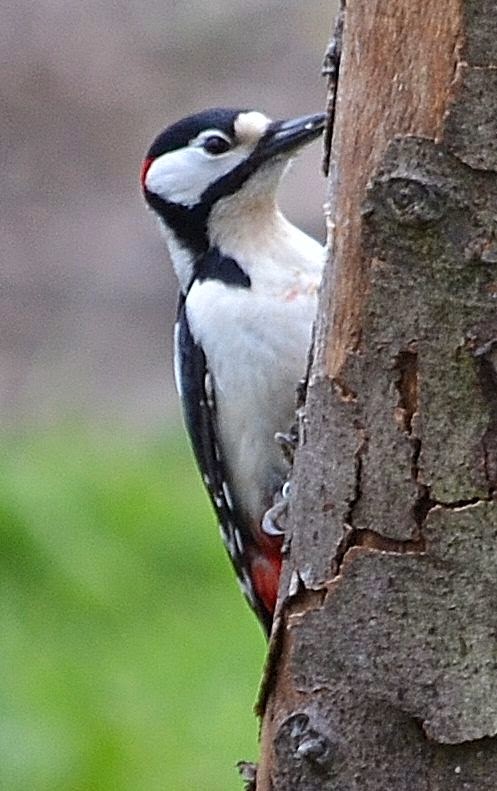
Of course, the star species of this reserve is the Great Spotted Woodpecker. This attractive bird can usually be seen from the visitor centre. The following pictures have been taken by me over the last year or so.


The reserve is looking great following extensive regeneration last year. New channels have been added, bringing the wetland birds closer to the visitor centre.
As usual, the Mallards were providing lots of entertainment near the visitor centre. Provided below is a picture of two posing Mallards taken by me earlier on this year.
Of course, the star species of this reserve is the Great Spotted Woodpecker. This attractive bird can usually be seen from the visitor centre. The following pictures have been taken by me over the last year or so.
RSPB Lochwinnoch is well worth a visit and only 25 minutes from Glasgow by train. There is also ample parking outside the visitor centre and entry is free for RSPB members. The reserve is open 7 days a week 10am - 5pm.
Sunday, 28 September 2014
Zeiss Terra ED 8x42
The Zeiss Terra ED has been available for a while now. It is Zeiss' entry into the world of chinese made binoculars and offers purchasers the chance to own a Zeiss binocular for around £350. It is a model that has intriuged me, having previously owned the Zeiss Conquest HD 8x42.

At first glance when viewing the binocular online, the Zeiss Terra ED 8x42 looks quite similar to the more expensive, German made Conquest HD. However, once I took it out of the plastic box it was quite clear this was a cheaper binocular. It feels solid enough and has a good weight to it, although at 690g it is certainly not too heavy. I couldn't help noticing that it just doesn't have the same quality about it that other Zeiss models do have. To be honest, it is completely unfair to expect that same quality given the difference in price.
Zeiss describes the Terra as "an eye-catcher. The modern and attractive up-to-the-minute ZEISS design is available in the colours deep blue and cool grey." I chose the "cool grey" as the lesser of the too evils. I didn't particularly find either colour "eye catching". The armouring on the binocular seems thick enough, but it doesn't feel all that comfortable to me. The body is fibre glass reinforced. They are waterproof and fogproof.
The focussing knob is large and well positioned and has a plastic feel to it. It is wide enough to use with two fingers. I find the grooves to be too spaced out and found it difficult to grip. As a result, my fingers slip off quite often. It focusses from left to right, from close focus to infinity in just under one full rotation. The focussing is very light and smooth. I normally like a fast and smooth focusser but I find it quite difficult to get a sharp picture. One tiny touch of the focussing wheel and the view is out of focus.
Eye relief, at 18mm is excellent for those who wear glasses. For those who don't, the eye pieces extend out rather stiffly. There are intermediate stops but I find it quite difficult to tell where the stops should be. However, when fully extended they stay in place well.
The field of view is nothing special at 125m at 1000m although I don't get the impression that the view is claustrophobic. Close focus is an impressive 1.6m although I could focus to about 1.4m which is excellent. More on this later.
The Terra has thus far received mixed reviews and there has been suggestions that there is a lot of sample variation. The sharpness on my model appear excellent from 20m to infinity. I don't do any formal type of resolution testing but I haven't seen anything that would match this sharpness at this price point. There is a good dose of pincushion and a bit of field curvature. I estimate the sweet spot is around 70%, after which the sharpness deteriorates quite rapidly. The out 10% is unusable, but can be focussed out.
However, I have to say that I find it really difficult to get a sharp image at the close focus end of the spectrum. Maybe it is the fast focusser, but I found it very difficult and two of my much cheaper 8x42 models easily outperformed the Terra in this regard. This was a big disappointment for me as I do a bit of insect watching.
I found the view very contrasty. Chromatic Abberation appears to be very well controlled. It's very good in the centre and still quite modest out to the edges. Stray light management is a real strength. I detest stray light but the Terra is one of the best I have seen in this regard. The colour balance is slightly warm, which I like, and there's a real vibrancy about the colours.
I found the low light performance of the Terra fantastic. I used them in early evening and they really sparkled. I could easily get a sharp image even past sunset. I would say this is a real strength and fantastic considering the price.
In many respects this is probably one of the best £300 models I've tried in terms of the optical performance in the centre of the view. It really is a joy to use. However, as mentioned about the close focus ability was a disappointment. The outer components are a bit of a let down too. I can't escape the feeling that this is a "cheap binocular" with a really plastic feel to it - it even has a plastic/chemical smell to it. It is also a bit of a disappointment that a case is not provided. However, in general terms the Terra is very good value for money.

At first glance when viewing the binocular online, the Zeiss Terra ED 8x42 looks quite similar to the more expensive, German made Conquest HD. However, once I took it out of the plastic box it was quite clear this was a cheaper binocular. It feels solid enough and has a good weight to it, although at 690g it is certainly not too heavy. I couldn't help noticing that it just doesn't have the same quality about it that other Zeiss models do have. To be honest, it is completely unfair to expect that same quality given the difference in price.
Zeiss describes the Terra as "an eye-catcher. The modern and attractive up-to-the-minute ZEISS design is available in the colours deep blue and cool grey." I chose the "cool grey" as the lesser of the too evils. I didn't particularly find either colour "eye catching". The armouring on the binocular seems thick enough, but it doesn't feel all that comfortable to me. The body is fibre glass reinforced. They are waterproof and fogproof.
The focussing knob is large and well positioned and has a plastic feel to it. It is wide enough to use with two fingers. I find the grooves to be too spaced out and found it difficult to grip. As a result, my fingers slip off quite often. It focusses from left to right, from close focus to infinity in just under one full rotation. The focussing is very light and smooth. I normally like a fast and smooth focusser but I find it quite difficult to get a sharp picture. One tiny touch of the focussing wheel and the view is out of focus.
Eye relief, at 18mm is excellent for those who wear glasses. For those who don't, the eye pieces extend out rather stiffly. There are intermediate stops but I find it quite difficult to tell where the stops should be. However, when fully extended they stay in place well.
The field of view is nothing special at 125m at 1000m although I don't get the impression that the view is claustrophobic. Close focus is an impressive 1.6m although I could focus to about 1.4m which is excellent. More on this later.
The Terra has thus far received mixed reviews and there has been suggestions that there is a lot of sample variation. The sharpness on my model appear excellent from 20m to infinity. I don't do any formal type of resolution testing but I haven't seen anything that would match this sharpness at this price point. There is a good dose of pincushion and a bit of field curvature. I estimate the sweet spot is around 70%, after which the sharpness deteriorates quite rapidly. The out 10% is unusable, but can be focussed out.
However, I have to say that I find it really difficult to get a sharp image at the close focus end of the spectrum. Maybe it is the fast focusser, but I found it very difficult and two of my much cheaper 8x42 models easily outperformed the Terra in this regard. This was a big disappointment for me as I do a bit of insect watching.
I found the view very contrasty. Chromatic Abberation appears to be very well controlled. It's very good in the centre and still quite modest out to the edges. Stray light management is a real strength. I detest stray light but the Terra is one of the best I have seen in this regard. The colour balance is slightly warm, which I like, and there's a real vibrancy about the colours.
I found the low light performance of the Terra fantastic. I used them in early evening and they really sparkled. I could easily get a sharp image even past sunset. I would say this is a real strength and fantastic considering the price.
In many respects this is probably one of the best £300 models I've tried in terms of the optical performance in the centre of the view. It really is a joy to use. However, as mentioned about the close focus ability was a disappointment. The outer components are a bit of a let down too. I can't escape the feeling that this is a "cheap binocular" with a really plastic feel to it - it even has a plastic/chemical smell to it. It is also a bit of a disappointment that a case is not provided. However, in general terms the Terra is very good value for money.
Hogganfield Loch
Yesterday I visited Hogganfield Loch in the east end of Glasgow, the main attraction of Hogganfield Park LNR.

The loch is a large and shallow with a wooded island situated in its centre. It is surrounded by marshes, woodland, ponds and grassland. The loch is home to a large variety of wild birds, including flocks of whooper swans who make the journey every winter from Iceland. The surrounding habitats are home to various insects, small mammals and pond life.
I arrived around midday and the loch was very busy with walkers, joggers, families, as well as several nature enthusiasts, some of whom were feeding the wildfowl. The two children's playparks were also very popular.
I spent a good few hours scanning the loch and noted many wild birds including, Great Crested Grebe, Little Grebe, Greylag Geese, Mute Swan, Tufted Duck, Mallard, Lesser Black Back Gull, Herring Gull, Black Headed Gull, circa 20 Cormorants perched in the trees and 3 buzzards circling overhead.
I then took one of the footpaths through the marshland and woodland towards Avenue End Road. This led me to Cardowan Moss LNR. Here I saw several garden and woodland birds, including Wood Pigeon, Carrion Crow, Blue Tit, Great Tit, Coal Tit and Chaffinch, as well as a Small Tortoiseshell butterfly. A catalogue picture is provided below.

A very good day with lots of fantastic wildlife - and just 10 minutes from Glasgow City Centre!

The loch is a large and shallow with a wooded island situated in its centre. It is surrounded by marshes, woodland, ponds and grassland. The loch is home to a large variety of wild birds, including flocks of whooper swans who make the journey every winter from Iceland. The surrounding habitats are home to various insects, small mammals and pond life.
I arrived around midday and the loch was very busy with walkers, joggers, families, as well as several nature enthusiasts, some of whom were feeding the wildfowl. The two children's playparks were also very popular.
I spent a good few hours scanning the loch and noted many wild birds including, Great Crested Grebe, Little Grebe, Greylag Geese, Mute Swan, Tufted Duck, Mallard, Lesser Black Back Gull, Herring Gull, Black Headed Gull, circa 20 Cormorants perched in the trees and 3 buzzards circling overhead.
I then took one of the footpaths through the marshland and woodland towards Avenue End Road. This led me to Cardowan Moss LNR. Here I saw several garden and woodland birds, including Wood Pigeon, Carrion Crow, Blue Tit, Great Tit, Coal Tit and Chaffinch, as well as a Small Tortoiseshell butterfly. A catalogue picture is provided below.
A very good day with lots of fantastic wildlife - and just 10 minutes from Glasgow City Centre!
Subscribe to:
Posts (Atom)